

When a horse or companion animal develops a mobility problem, a brace can look like a straightforward answer. The useful question is more specific: what does this animal need help doing, and can an external support safely contribute to that goal?
Veterinary orthopedic bracing may be considered within a treatment plan for selected injuries or ongoing mobility limitations. Understanding its purpose, the evidence behind it, and the work involved at home helps owners have a more productive conversation with their veterinarian.


What a veterinary brace does
An orthosis is an external device that supports an existing body part. A prosthesis replaces a missing body part. These terms are sometimes used together, but they describe different devices and different clinical problems. Texas A&M’s veterinary rehabilitation service makes this distinction in its explanation of orthotic and prosthetic support.
Depending on its design and the veterinarian’s goal, an orthosis may support a joint, restrict a particular movement, or protect a vulnerable limb during a planned stage of care. The intended result should be described in everyday terms: for example, supporting comfortable walking or limiting a movement that stresses an injured structure. Ask the clinician to explain exactly which movement the proposed device is intended to control.
The diagnosis comes first
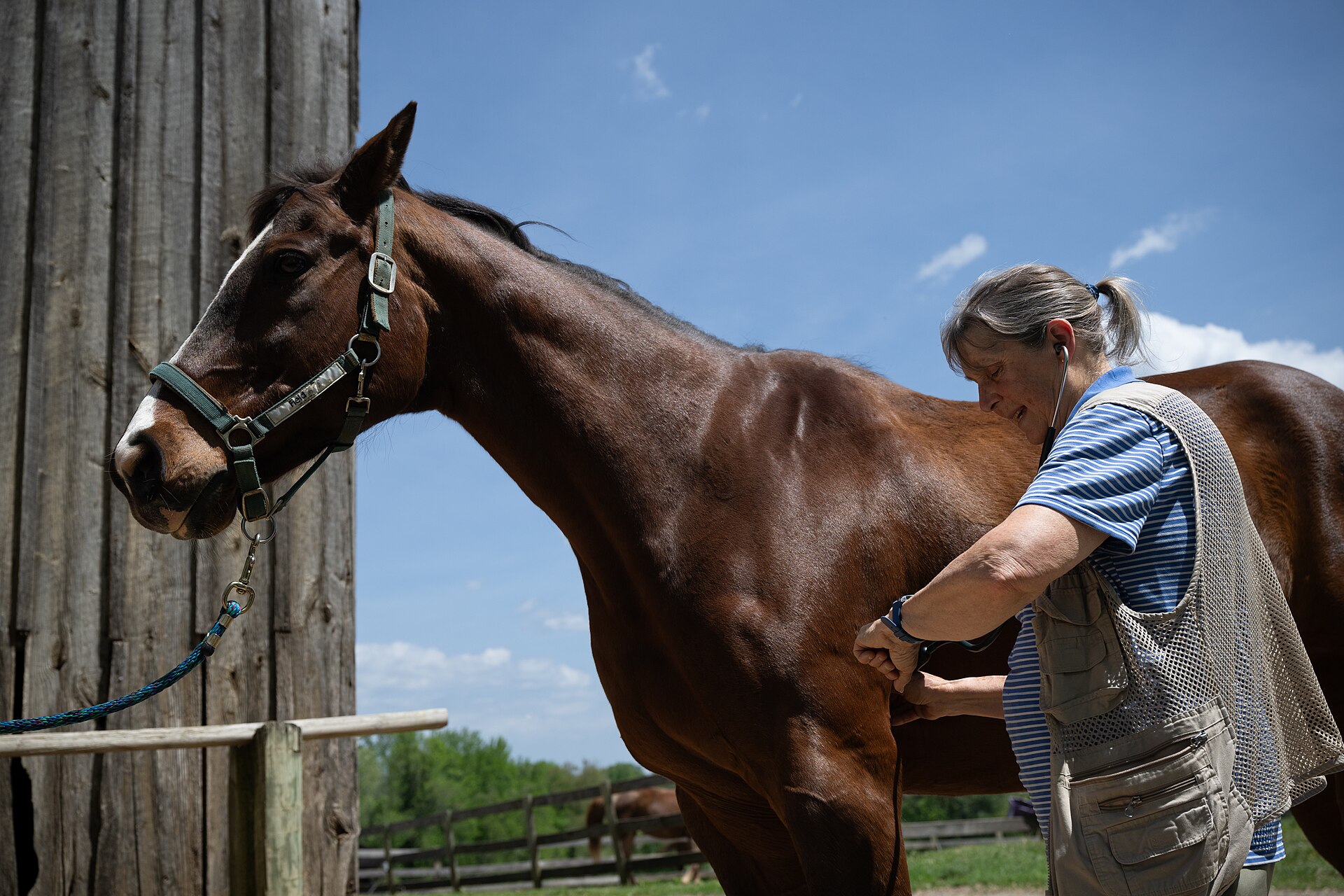
A change in gait tells you that something needs attention; it does not identify the treatment. In horses, the investigation may include observation at rest and in motion, a physical examination, diagnostic local anesthesia, and imaging selected for the suspected problem. The UC Davis Equine Surgery and Lameness Service describes this stepwise approach to locating the source of lameness.
That matters when considering a brace. Two animals that appear to limp similarly may have different injuries, different stability requirements, and different recovery plans. Before discussing materials or size, ask what diagnosis has been established and what uncertainty remains.
What research tells us about horses
Equine bracing has a developing evidence base. A 2025 study of a fetlock orthotic examined 12 healthy horses at walk and trot. The tested device reduced measured fetlock extension and range of motion under the study conditions.
This is useful biomechanical evidence: the device changed how the joint moved. However, the horses were healthy, and the experiment was not a trial of long-term recovery in horses with tendon or ligament injuries. It cannot establish that every brace improves healing, prevents reinjury, or makes a horse ready to return to ridden work.
When discussing a device, ask whether the supporting evidence concerns joint motion, comfort, function, or actual healing. Those are related questions, but a result in one category does not automatically answer the others.
Dogs and other animals need their own assessment
Dogs are represented in much of the published veterinary orthotics literature. Their experience is informative, but it should not be treated as a ready-made prescription for a horse or another species.
Canine cranial cruciate ligament disease illustrates why treatment choices need context. The American College of Veterinary Surgeons describes surgery as typically the best treatment for controlling the associated knee instability. Nonsurgical management may include rehabilitation and, in selected cases, an orthosis; brace-related sores, intolerance, and continued pain remain concerns.
For an animal other than a dog or horse, ask the treating veterinarian what species-specific experience and evidence inform the recommendation. A successful case involving a different species is encouraging, but it does not establish the right design or likely outcome for your animal.
Fit and follow-up are part of treatment
The device is only one part of the plan. In a prospective study of canine orthoses and prostheses, researchers identified three important problem categories: skin complications, mechanical problems, and animals not accepting the device. The study also lacked a control group, limiting conclusions about how much observed improvement came from the devices themselves.
Ask who will check the fit, how concerns should be reported, and what happens if the device needs adjustment. Do not assume that rubbing or a reluctance to move is something the animal must simply get used to. Request clear instructions about warning signs and whom to contact before extending wear time or making a change.
Consider the daily routine as well as the device
A 2021 survey of 56 owners of dogs using orthoses found that owners’ perceptions of their dogs’ quality of life were linked with their own experience. This was an owner survey, not a controlled test of healing, but it highlights an important part of decision-making: the plan must be workable for the caregiver.
Before committing, discuss who will manage the device, whether the animal can be handled comfortably, how follow-up visits fit into your schedule, and the likely costs beyond fabrication. Ask about fitting appointments, adjustments, repairs, and reassessments rather than comparing purchase prices alone.
Agree on what success will look like
Useful questions include:
- What specific problem is the brace intended to address?
- What alternatives should we consider, including surgery where appropriate?
- How will we measure comfort and function over time?
- What would tell us to revise or stop this approach?
- Who decides when activity or device use can change?
The best starting point is a defined goal, a realistic understanding of the evidence, and a veterinary team able to reassess the animal’s response.
Sudden severe lameness, an abnormally positioned limb, or a suspected fracture requires prompt veterinary attention. For horses, ACVS advises contacting a veterinarian immediately and obtaining guidance before movement or stabilization. Do not wait for a routine bracing appointment.
Related educational video
Watch Bracing for cranial cruciate ligament injury, from dvm360, an original interview with rehabilitation clinician Carrie Adrian. This canine, condition-specific discussion offers an example of the decisions involved; it does not establish benefits for horses or replace an individual veterinary assessment.
This article is general education. A veterinarian who has examined your animal should determine whether bracing is appropriate and provide its fitting, activity, and monitoring instructions.
Leave a Reply